Commercial Case Study

Flat Roof Membrane Survey

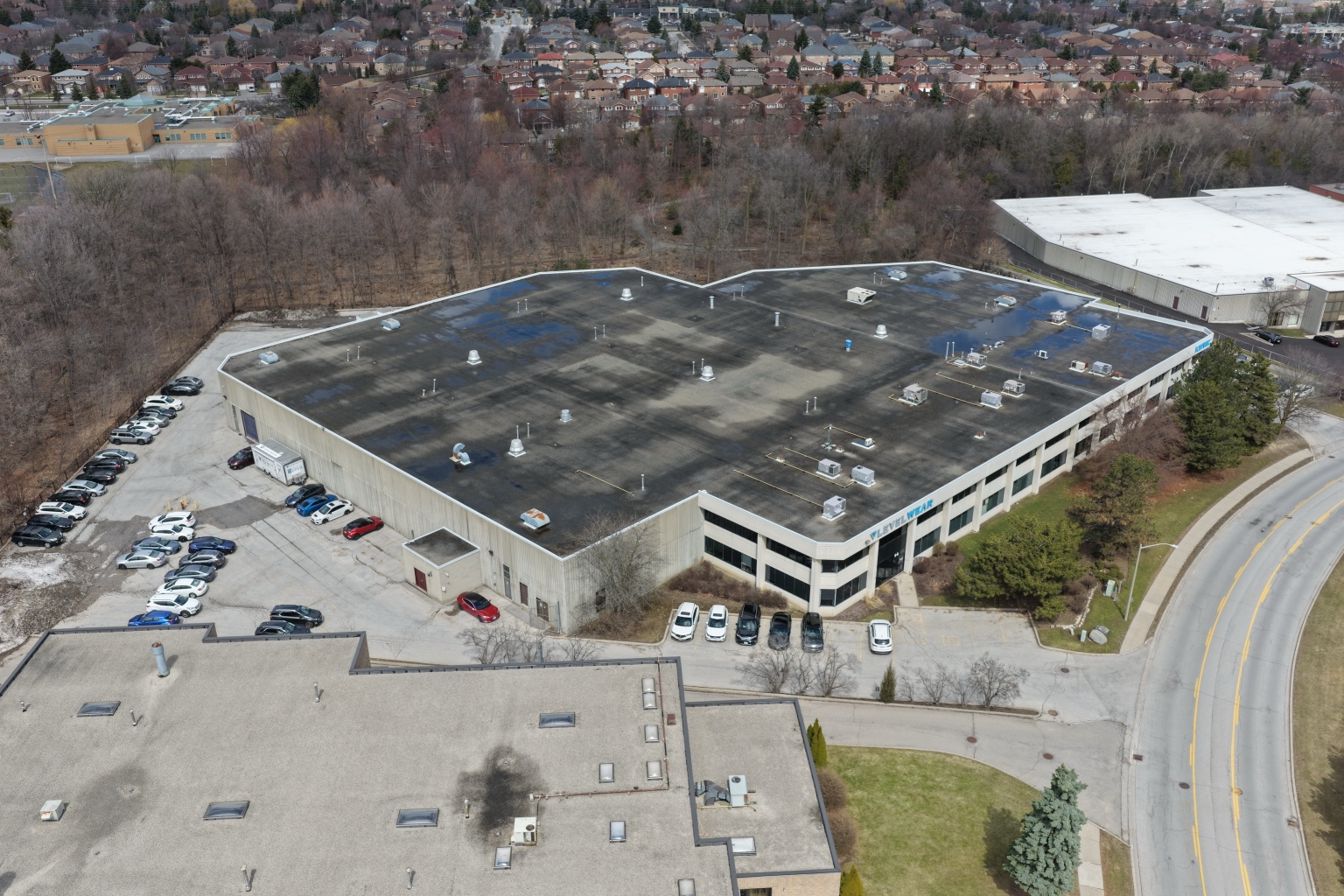
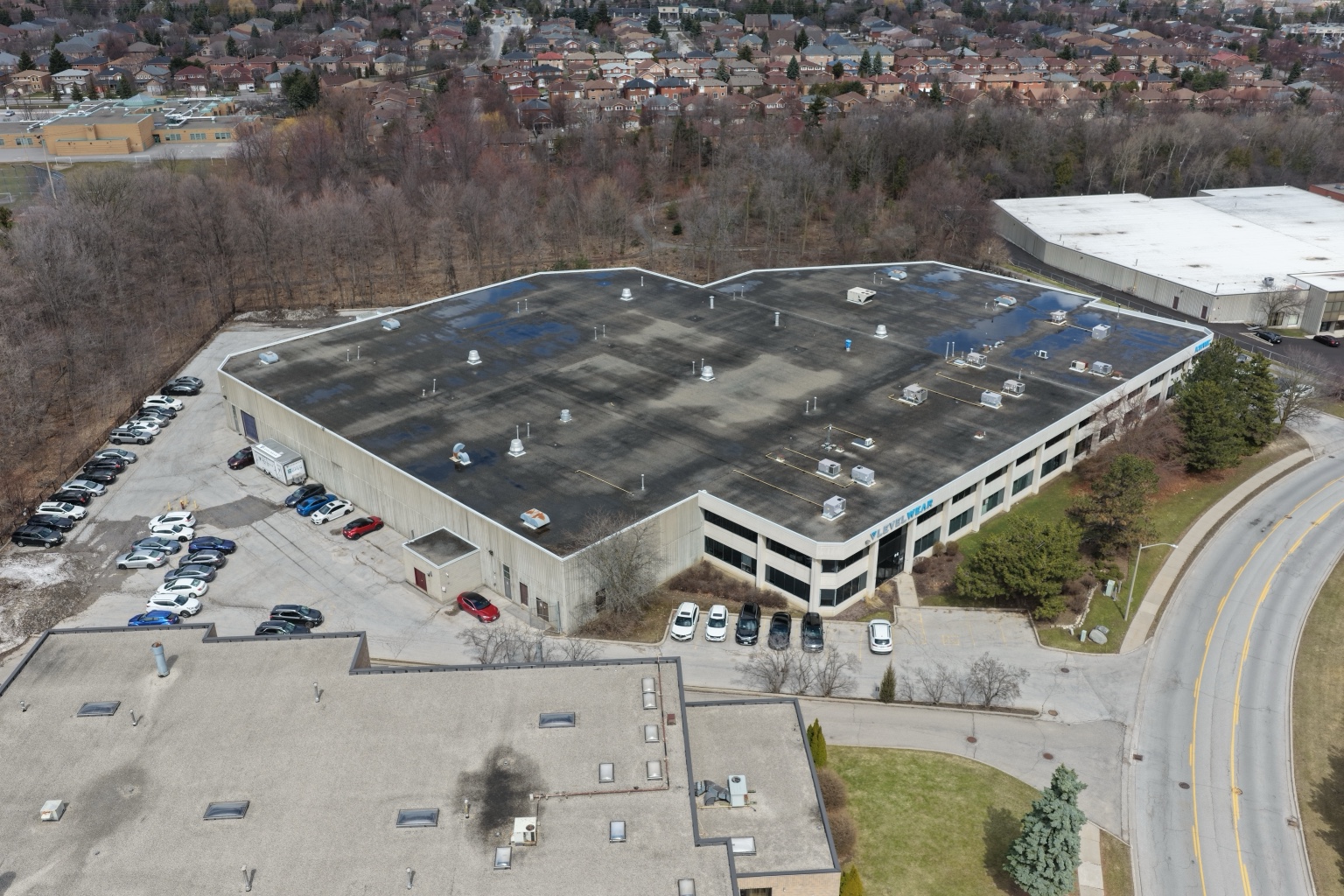
Drone-based visual roof assessment documenting ponding water, drainage inefficiency, debris accumulation, and visible surface condition indicators on a commercial flat roof.

Richmond Hill, Ontario Drone Visual Inspection Flat Roof Drainage Assessment Annotated Deliverables
Key Findings

Observed Roof Conditions

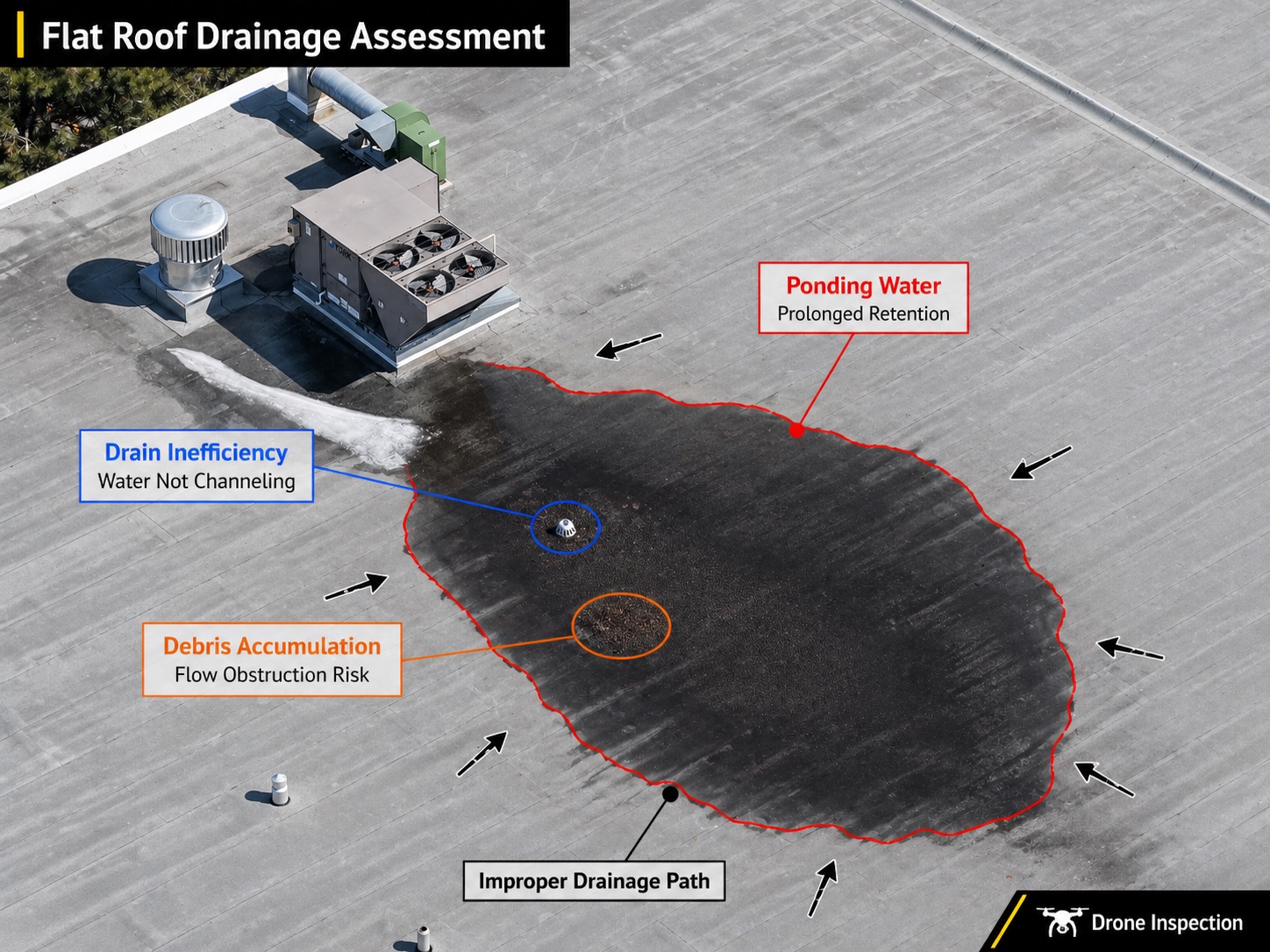
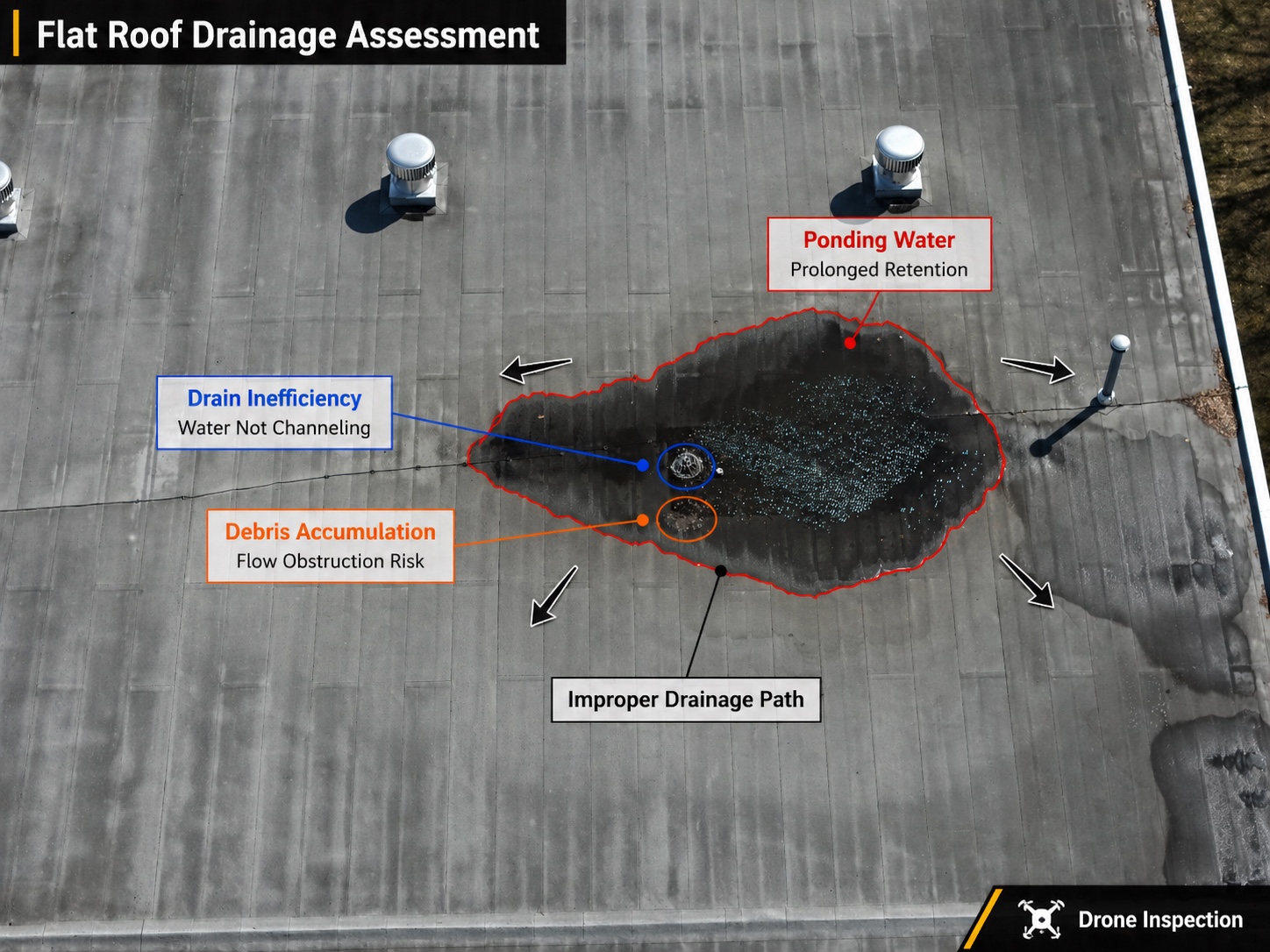
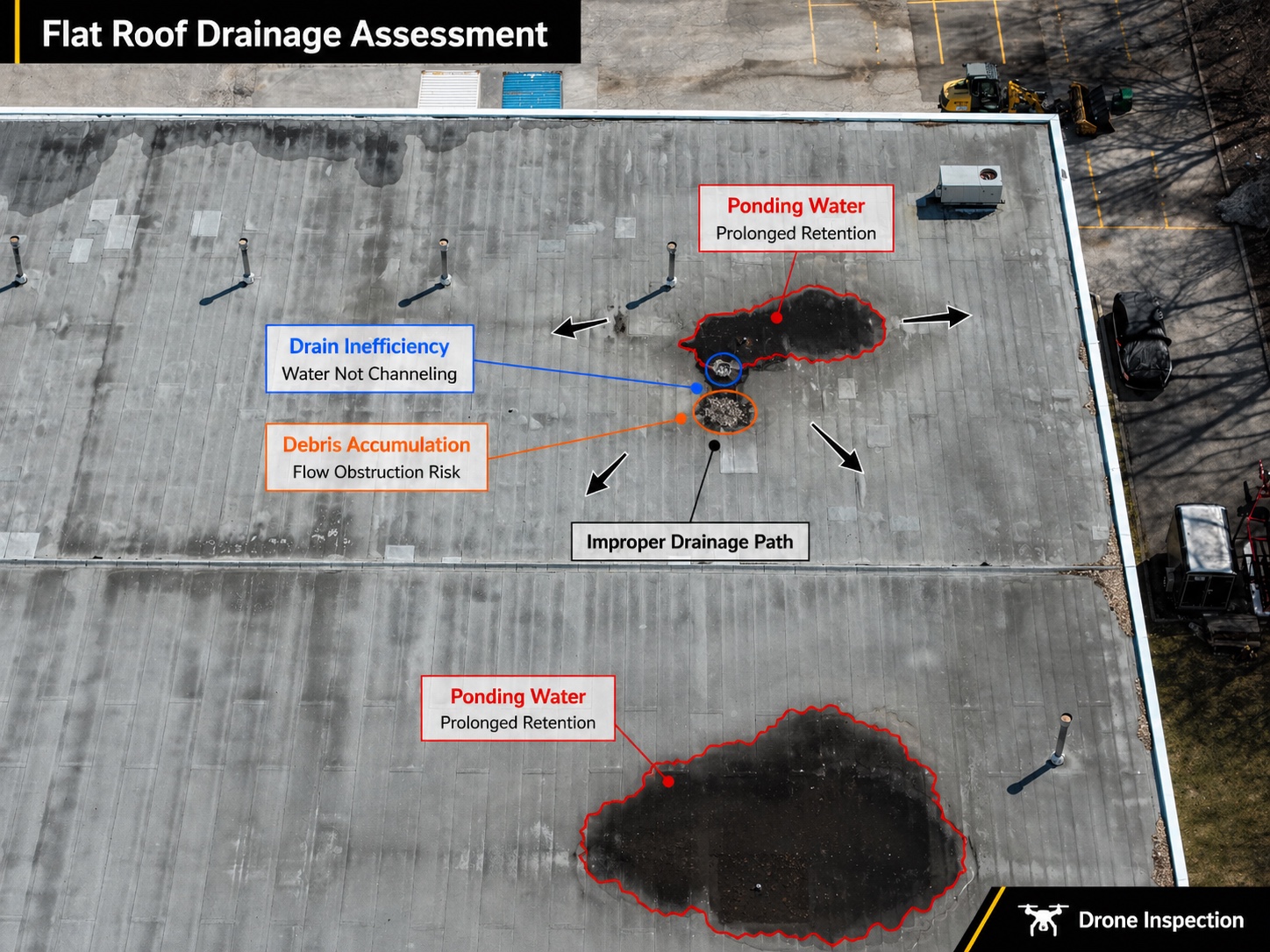
The inspection imagery identified multiple drainage-related concerns. The main finding was prolonged ponding around low areas, with visible debris accumulation and water not efficiently channeling toward roof drains.

Ponding Water

Large dark retention zones visible across the membrane surface.

Drain Inefficiency

Water appears to remain around drains instead of clearing effectively.

Debris Build-Up

Leaf and sediment accumulation present near low points and drains.

Surface Variation

Uneven drying patterns may indicate aging, low slope areas, or prior moisture exposure.

Annotated Images

Inspection Photo Set

Annotated aerial images showing the main roof drainage concerns and visual evidence captured during the drone inspection.
Practical Follow-Up

Clear drains and debris: Remove leaf buildup and sediment from low areas and roof drains.
Review slope and low points: Confirm whether ponding is caused by poor slope, settlement, or drain elevation.
Inspect membrane condition: Check seams, patches, and wet zones from roof level.
Consider thermal imaging: Use thermal review to screen for possible trapped moisture beneath the membrane.

Need a roof inspected?

Request a drone-based roof inspection with clear imagery, annotated findings, and professional documentation.

Request a Quote
Commercial flat roof overview enlarged